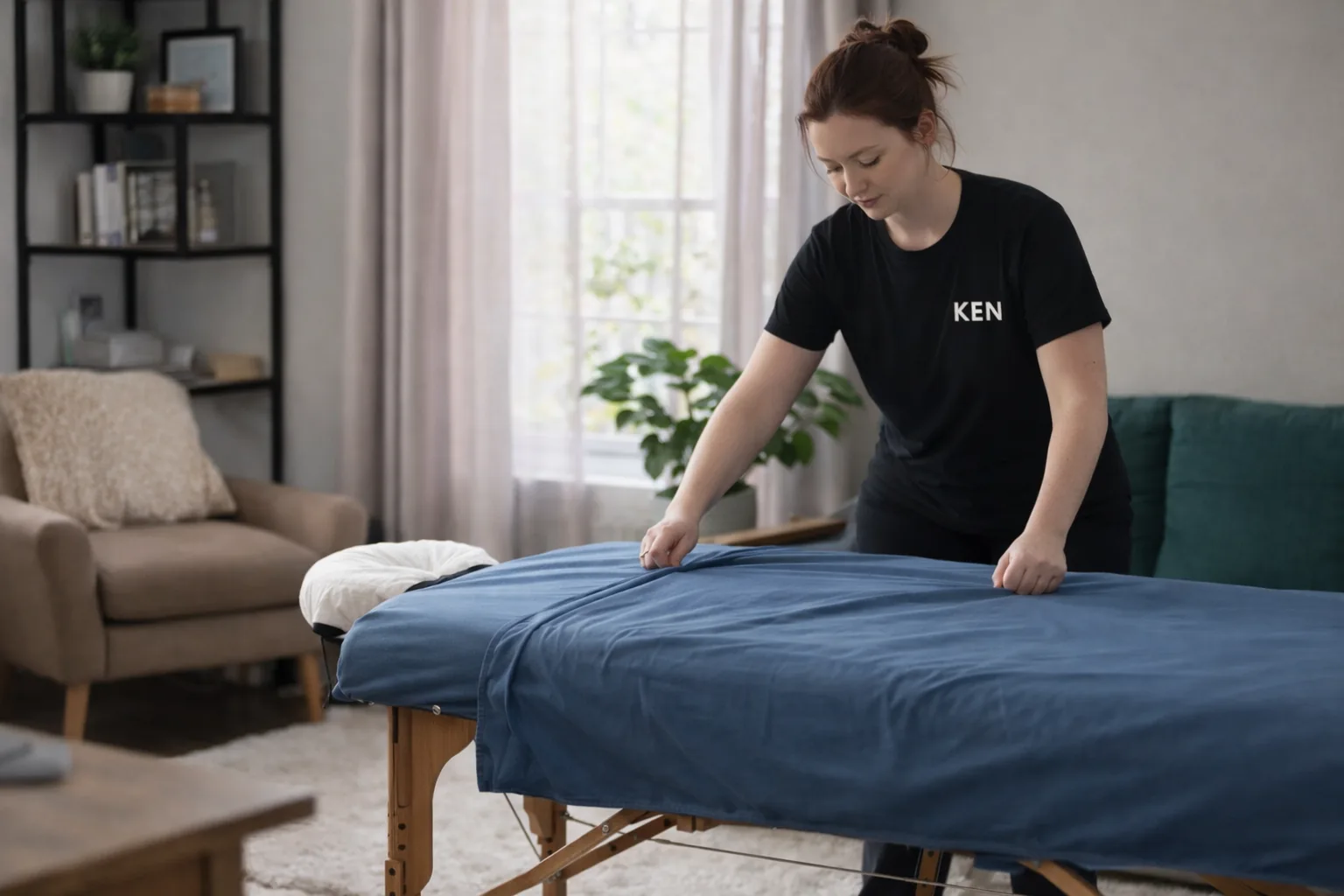
Pregnancy Pain Relief: Prenatal Massage at Home vs Maternity Clinic Visits
Pregnancy changes your body every week. Your center of gravity shifts forward. Your ligaments loosen from relaxin. Your lower back compensates for the growing weight in front. Your hips widen. Your feet swell. And through all of it, your options for pain relief narrow because most medications are off the table.
Prenatal massage at home addresses the muscular pain that pregnancy creates. Maternity clinic visits address the medical complications that pregnancy can produce. They are not the same thing, and knowing which one you need saves you time, money, and discomfort.
I am a licensed massage therapist, and all KEN Mobile Massage therapists are trained in prenatal massage techniques. Here is what we can address, what we cannot, and why the at-home format matters more during pregnancy than it does for any other type of session.
Written by Ken at KEN Mobile Massage, serving the Antelope Valley since 2017. This post is educational, not medical advice. Always consult your OB-GYN or midwife before starting any new therapy during pregnancy. If you experience vaginal bleeding, severe headache, sudden swelling, or contractions during any stage of pregnancy, contact your healthcare provider immediately.
What Pregnancy Does to Your Body
Understanding the pain helps you understand the solution.
Lower back pain. As the baby grows and your center of gravity shifts forward, your lumbar spine increases its curve to compensate. The erector spinae and quadratus lumborum muscles work overtime to keep you upright. By the second trimester, these muscles are chronically tight and fatigued. This is the most common pregnancy complaint I hear, and it is entirely muscular.
Sciatic-type pain. The growing uterus can put pressure on the sciatic nerve, creating pain that radiates from the lower back or buttock down the leg. In many cases, the actual cause is not nerve compression from the uterus but piriformis syndrome. The piriformis muscle, deep in the buttock, tightens as the hips shift and can compress the sciatic nerve from the outside.
Hip pain. Relaxin loosens the ligaments around the pelvis to prepare for delivery. This is necessary but it makes the hip joints less stable. The muscles around the hips (gluteus medius, TFL, adductors) work harder to compensate for the ligament laxity. They tighten, and the hips ache.
Swelling in the legs and feet. Increased blood volume and fluid retention, combined with the weight of the uterus on the pelvic veins, cause fluid to pool in the lower extremities. This is normal but uncomfortable.
Upper back and neck tension. As breasts enlarge and the body’s center of gravity shifts, the upper back and neck compensate. The thoracic spine rounds forward, the pectorals tighten, and the upper trapezius carries constant tension.
What Prenatal Massage at Home Addresses
Prenatal massage is specifically designed for the pregnant body. The therapist is trained in pregnancy physiology, contraindications, and modified techniques. Here is what it does.
Relieves lower back pain. Side-lying positioning allows direct access to the lumbar muscles without any pressure on the abdomen. Sustained pressure on the erector spinae and QL releases the chronic tension that builds from the postural shift. Most clients feel significant relief after a single session.
Reduces sciatic-type pain. If the cause is piriformis tightness (which it often is), direct pressure on the piriformis and surrounding hip rotators can reduce compression on the sciatic nerve. This is one of the most effective applications of prenatal massage.
Eases hip discomfort. Gentle but targeted work on the gluteal muscles, hip flexors, and adductors reduces the muscular compensation around the loosened ligaments. The goal is not deep tissue intensity. It is specific, moderate pressure on the muscles that are overworking.
May help reduce swelling. Gentle massage techniques that encourage fluid movement toward the lymphatic system may help reduce swelling in the legs and feet. This is not a cure for edema, but many clients report reduced swelling after sessions.
Addresses upper body tension. Neck, shoulders, and upper back respond well to massage during pregnancy. These muscles carry extra load and respond to the same techniques used in a standard session, just with modified positioning.
Activates the relaxation response. Pregnancy is physically demanding and often stressful. Massage activates the parasympathetic nervous system, reducing cortisol and increasing serotonin. Research by Field et al., published in the Journal of Psychosomatic Obstetrics and Gynecology (2004), found that prenatal massage was associated with reduced anxiety and improved mood in pregnant participants.
What Requires Your OB or Midwife
Prenatal massage does not address medical complications of pregnancy. The following conditions need your healthcare provider, not a massage therapist:
- Preeclampsia (high blood pressure, protein in urine, sudden severe swelling). This is a medical emergency. Massage does not treat blood pressure disorders.
- Placenta previa (placenta covering the cervix). Your OB manages this condition.
- Gestational diabetes. Managed through diet, monitoring, and sometimes medication.
- Premature contractions. If you are having contractions before 37 weeks, contact your healthcare provider.
- Vaginal bleeding at any stage. Call your doctor before doing anything else.
- Severe or sudden headache. This can be a symptom of preeclampsia and needs medical evaluation.
If you have any of these conditions, get clearance from your OB before booking a massage. I will ask about medical conditions during intake, and if anything concerns me, I will recommend you check with your provider before we proceed. That is not overcaution. That is the standard of care.
Contraindications for Prenatal Massage
There are specific situations where prenatal massage should be postponed or modified:
- First trimester. Many therapists and physicians recommend waiting until the second trimester (after 12 weeks) to begin regular massage. The first trimester carries the highest risk of miscarriage, and while there is no evidence that massage causes miscarriage, most practitioners prefer the precaution.
- High-risk pregnancy. If your pregnancy has been classified as high-risk for any reason, get written clearance from your OB before booking.
- Deep vein thrombosis (DVT). Pregnancy increases the risk of blood clots. If you have been diagnosed with or are at high risk for DVT, massage on the legs is contraindicated.
- Severe preeclampsia or HELLP syndrome. Massage is contraindicated.
Why the At-Home Format Matters During Pregnancy
For every type of massage, the at-home format is more convenient than driving to a spa. But during pregnancy, the convenience gap becomes a genuine quality-of-life difference.
No driving while uncomfortable. By the third trimester, driving is physically uncomfortable. Your belly presses against the steering wheel. Getting in and out of the car is an ordeal. Sitting in traffic with lower back pain is miserable. When the therapist comes to you, that entire experience disappears.
No climbing on and off a high spa table. Spa tables are mounted high for the therapist’s ergonomics. Getting onto a high table with a 30-week belly is awkward and sometimes unsafe. Mobile massage tables are set at a comfortable height, and your therapist helps you position safely.
Immediate rest afterward. After a prenatal massage, you should rest and hydrate. At a spa, you get dressed, walk to your car, drive home, and then rest. At home, you close the door behind the therapist and lie down on your own couch.
Your own bathroom. Pregnant people use the bathroom frequently. At home, it is ten steps away. At a spa, it is down a hallway in a robe past other clients. This detail sounds small until you are 32 weeks pregnant and it is not small at all.
Familiar environment. Being in your own space reduces the stress that comes with navigating a new environment while physically limited. You control the temperature. You control the noise. You are comfortable before the session even begins.
For clients in Palmdale, Lancaster, and the surrounding Antelope Valley communities, the drive to the nearest spa with prenatal-trained therapists can be 20 to 40 minutes each way. That is up to 80 minutes of uncomfortable driving added to a 60-minute session. Mobile prenatal massage eliminates that entirely.
When to Start and How Often
When to start: Most practitioners recommend beginning in the second trimester (after week 12). Some clients start earlier with physician clearance.
Second trimester (weeks 13 to 27): Every two to four weeks works well for most clients. The body is changing but the discomfort is usually manageable.
Third trimester (weeks 28 to 40): Every one to two weeks. This is when the lower back pain, hip pain, and swelling intensify. More frequent sessions provide more consistent relief as the physical demands increase.
Session length: 60 minutes is the most common for prenatal clients. 90 minutes is available for those who want full-body work including legs and feet. Positioning changes take a bit longer during prenatal sessions, so I account for that in the session time.
The Bottom Line
Pregnancy creates muscular pain patterns that respond well to prenatal massage. Medical complications of pregnancy require your OB or midwife. Knowing the difference saves you time and gets you the right care.
Prenatal massage at home removes the driving, the spa logistics, and the physical effort of getting to an appointment. During the third trimester especially, that difference is not a luxury. It is practical.
Learn more about the prenatal massage experience or read about your first time getting a massage at home. Check pricing for your area and book your session. Prenatal massage is available in the Local Zone.