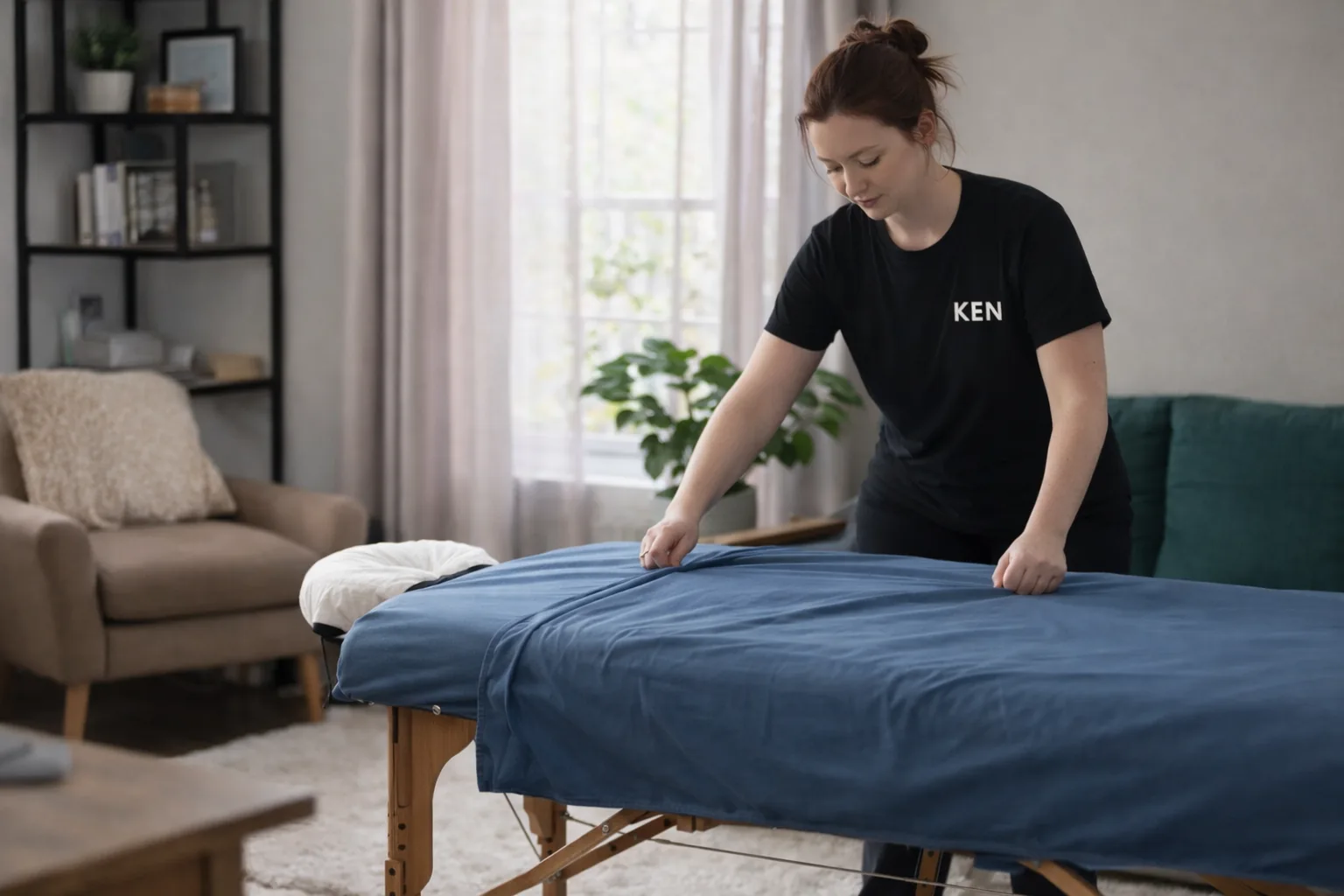
Massage vs Chiropractor: When to Choose Which for Lower Back Pain
Lower back pain is the single most common reason adults seek any kind of hands-on therapy. If you are reading this, you are probably deciding between two options: a chiropractor or a massage therapist. Maybe someone told you to see a chiropractor. Maybe someone else told you massage would fix it. And now you are not sure which one to try first.
I am a massage therapist who works with lower back pain clients every week. I am not a chiropractor, and I am not going to pretend that massage is the answer to everything. But I can tell you when massage therapy is the better first step, when chiropractic care makes more sense, and when you need to skip both of us and see a doctor.
Written by Ken at KEN Mobile Massage, serving the Antelope Valley since 2017. This post is educational, not medical advice. If you are experiencing severe or persistent lower back pain, consult your physician before starting any treatment.
What Is Actually Causing Your Lower Back Pain
This is the question that determines which provider helps you more. Lower back pain generally falls into two categories.
Muscular and soft tissue pain. The muscles in your lower back are tight, knotted, or inflamed. This happens from sitting at a desk for hours, sleeping in an awkward position, lifting something heavy with poor form, or carrying stress in your body. The muscles themselves are the problem. They are shortened, adhered to surrounding tissue, or in spasm. There may be trigger points in the quadratus lumborum, the erector spinae, or the gluteal muscles that refer pain into the lower back.
Structural and skeletal pain. Something in the spine itself is out of alignment, compressed, or damaged. This includes herniated discs, spinal stenosis, vertebral misalignment (subluxation), facet joint dysfunction, or degenerative disc disease. The bones, discs, or joints are the problem, and the surrounding muscles are reacting to protect the structure.
Most people have some combination of both. But the ratio matters.
What Massage Therapy Does for Lower Back Pain
Massage works on the soft tissue: muscles, fascia, tendons, and the connective tissue that surrounds everything. For lower back pain, a deep tissue massage session targets the specific muscles that are causing or contributing to your pain.
Releases chronic muscle tension. Sustained pressure on tight muscles convinces the nervous system to let go of the contraction. This is not just temporary relief. When a muscle has been in chronic tension for weeks or months, the tissue shortens and adhesions form. Deep tissue work breaks those adhesions and restores the muscle to its normal resting length.
Addresses trigger points. Trigger points are hyperirritable spots in muscle fibers that refer pain to other areas. A trigger point in your gluteus medius can send pain straight into your lower back. A trigger point in your psoas can mimic disc pain. Your massage therapist can locate and deactivate these points through sustained pressure.
Improves blood flow. Tight muscles restrict their own blood supply. Massage increases local circulation, bringing oxygen and nutrients to damaged tissue and flushing metabolic waste. A randomized controlled trial by Cherkin et al., published in the Annals of Internal Medicine (2011), found that massage therapy produced clinically meaningful improvements in lower back pain that lasted at least six months.
Reduces the guarding response. When your back hurts, the surrounding muscles tighten to protect the area. This guarding response is useful in the first few hours after an injury. After that, it becomes part of the problem. Massage helps the nervous system dial down the protective tension so the tissue can begin to heal.
What Chiropractic Does for Lower Back Pain
Chiropractic care focuses on the skeleton: spinal alignment, joint mobility, and the relationship between the vertebrae and the nervous system.
Restores spinal alignment. If a vertebra is slightly out of position (subluxation), a chiropractor uses specific manual adjustments to move it back. This can immediately reduce nerve compression and improve range of motion.
Improves joint mobility. Facet joints in the spine can become restricted, limiting movement and causing localized pain. Chiropractic adjustments restore normal joint motion.
Reduces nerve impingement. When spinal structures compress a nerve root, the pain can radiate down the leg (sciatica) or across the lower back. Chiropractic adjustments aim to create space around the nerve.
When to Choose Massage First
Choose massage therapy as your first step when:
- Your lower back pain started after a period of prolonged sitting, stress, or repetitive activity
- The pain is dull, achy, and spread across a broad area rather than a sharp, specific point
- Your pain gets worse at the end of the workday or after sleeping
- You can point to the muscles that hurt when you press on them
- You have no numbness, tingling, or shooting pain down your legs
- You have tried stretching and it helps temporarily but the pain returns
These patterns point to muscular tension as the primary cause. Massage addresses that directly. Many of the clients I see in Palmdale and Lancaster come in with exactly this pattern. Desk workers, warehouse employees, and anyone who commutes long distances. Their backs are not structurally damaged. Their muscles are just overworked and undertreated.
When to Choose a Chiropractor First
Choose chiropractic care as your first step when:
- Your pain is sharp and localized to a specific point on the spine
- You have numbness, tingling, or shooting pain radiating into your legs
- Your pain started after a fall, car accident, or sudden impact
- You hear or feel clicking, popping, or grinding in your spine during movement
- You have been diagnosed with a disc issue or spinal condition
- Your range of motion is severely limited in one specific direction
These patterns suggest a structural component that massage alone will not resolve. A chiropractor can evaluate the spine, take imaging if needed, and determine whether an adjustment is appropriate.
When to Use Both
This is the most common recommendation and for good reason. Most chronic lower back pain involves both muscular and structural components. The muscles are tight because the structure is off. The structure stays off because the muscles are pulling it out of alignment. It is a cycle.
The ideal approach for many people:
- See a chiropractor to evaluate the structural component and begin adjustments if appropriate
- Add massage therapy to release the muscular tension that accumulated around the misalignment
- Maintain with regular massage sessions to prevent the muscles from pulling the spine back out of alignment between adjustments
I have clients in Santa Clarita and Valencia who see their chiropractor every two to four weeks and book a deep tissue session with me in between. The chiropractic work addresses the skeleton. The massage work addresses the soft tissue. Together, they address the full picture.
When to Skip Both and See a Doctor
Go to a doctor or urgent care first if:
- Your lower back pain followed a traumatic injury (fall, car accident, heavy impact)
- You have loss of bladder or bowel control alongside back pain (this is a medical emergency)
- You have unexplained weight loss with back pain
- The pain wakes you from sleep and does not respond to any position change
- You have a fever combined with back pain
- The pain has been getting progressively worse for more than four weeks despite rest
These are red flags that suggest something beyond muscular tension or spinal misalignment. A doctor can order imaging, blood work, and other diagnostics that neither a massage therapist nor a chiropractor can provide.
I will tell you if something I find during a session does not feel like a muscular issue. That is part of my job. If I think you need medical evaluation before I continue working on you, I will say so directly.
Quick Comparison
| Factor | Massage Therapy | Chiropractic |
|---|---|---|
| Primary focus | Muscles, fascia, soft tissue | Spine, joints, skeletal alignment |
| Best for | Muscular tension, trigger points, stress-related pain | Subluxation, disc issues, nerve compression |
| Session format | 60-120 min hands-on bodywork | 15-30 min adjustment visits |
| Frequency | Weekly to monthly maintenance | Weekly to monthly depending on condition |
| At-home option | Yes (mobile massage comes to you) | No (requires office equipment) |
| Recovery time | None. Resume normal activity immediately | Minimal. Some soreness possible after adjustment |
The Bottom Line
Lower back pain is not one condition. It is a category that includes dozens of different problems with different causes and different solutions. The right provider depends on what is actually causing your pain.
If your lower back pain is muscular, start with massage. If it is structural, start with chiropractic. If you are not sure, either provider can evaluate you and point you in the right direction. Most chronic cases benefit from both.
Ready to address the muscular side of your lower back pain? Learn more about deep tissue massage or Swedish massage for general tension relief. Check pricing for your zone and book a session.