Massage for Desk Workers: Relief for Sitting All Day
If you work at a desk, your body already knows. Tight shoulders. A neck that does not turn as far as it used to. Lower back stiffness that sets in by 2 PM and does not leave until you are asleep. Hip flexors that feel like they have shortened by an inch over the past year.
Massage for desk workers is not a luxury. It is maintenance for a body that was not designed to sit in the same position for eight to ten hours a day. I work with remote workers, office employees, and people who split time between both across the Antelope Valley, and the patterns I see are consistent.
Here is what is happening in your body, which massage techniques address it, and how often you should be getting work done.
Written by Ken at KEN Mobile Massage, serving the Antelope Valley since 2017. CAMTC certified, fully insured.
The Four Pain Patterns of Desk Work
1. Upper Trapezius and Neck
The upper traps are the muscles that run from your shoulders to the base of your skull. When you sit at a desk, especially if your monitor is too low or you look down at a laptop, these muscles stay contracted for hours. They are holding your head up against gravity in a forward position they were never designed to sustain.
The result: knots, headaches that start at the base of the skull, and a neck that feels stiff when you try to look over your shoulder.
What works: Deep tissue massage on the upper traps, levator scapulae (the muscle that connects your shoulder blade to your neck), and suboccipital muscles at the skull base. I also work the SCM muscles on the front and side of the neck, which are often overlooked but contribute heavily to that “head forward” tension.
2. Lower Back
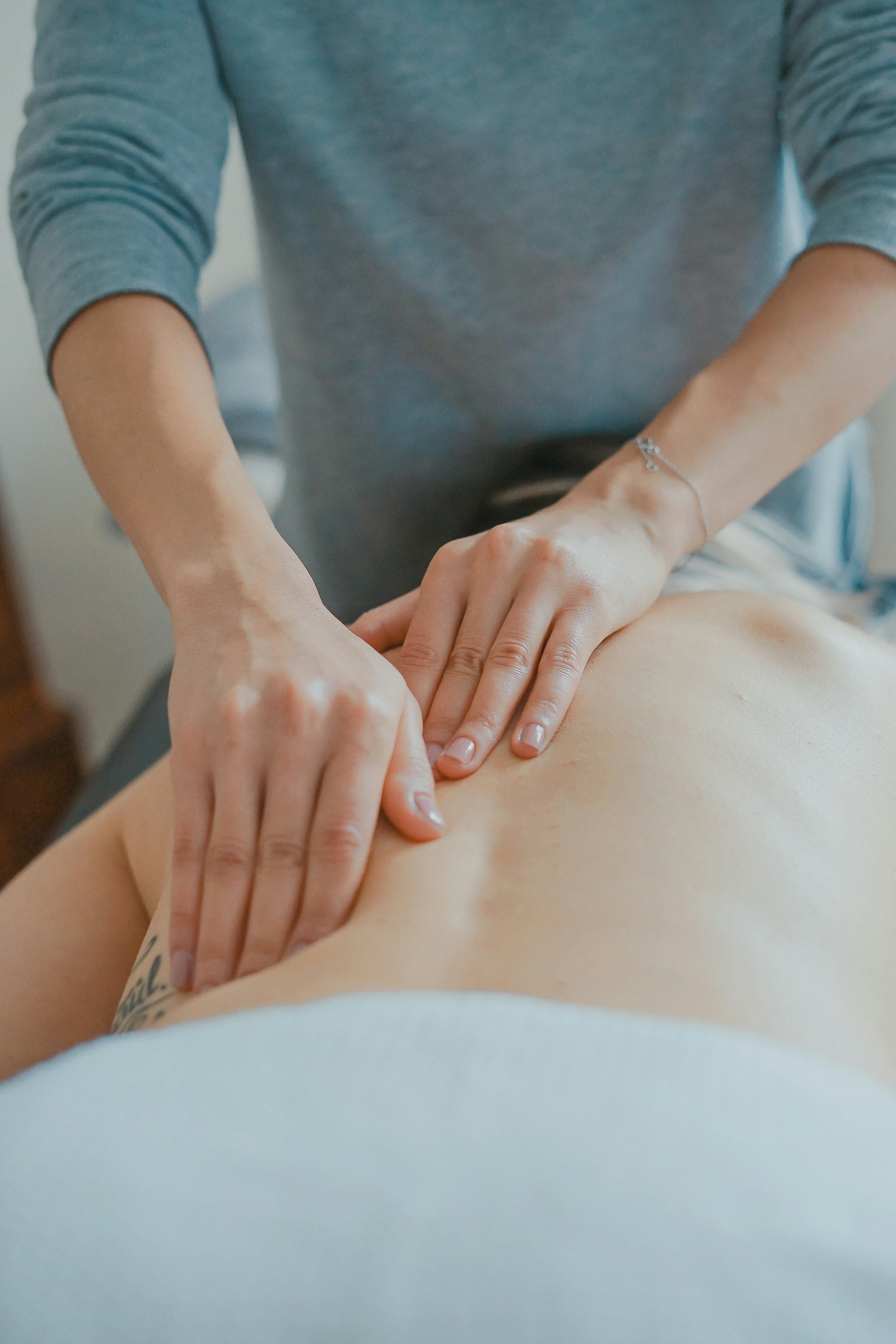
When you sit, your lumbar spine loses its natural curve. The muscles along the spine (erector spinae) and the deep stabilizers (multifidus, quadratus lumborum) either shut off or lock up. Over time, this creates a dull ache that sits right above the beltline.
Standing up after a long sitting session and feeling like you cannot straighten all the way? That is your QL and lumbar erectors letting you know they have been compressed for too long.
What works: A combination of deep tissue on the QL and erectors, plus specific trigger point work on any referred pain patterns. If the pain radiates into the glutes, I work the gluteal muscles and piriformis as well, because the lower back rarely acts alone.
3. Hip Flexors and Psoas
Sitting shortens your hip flexors. The psoas muscle, which runs from your lower spine through the pelvis to the top of your thighbone, gets stuck in a contracted position. When you stand up, it pulls your pelvis forward, which increases the curve in your lower back and creates a cycle of tension.
Most people do not connect their lower back pain to their hip flexors, but in desk workers, the two are almost always linked.
What works: Direct psoas release is advanced work that requires careful positioning (usually side-lying or supine with knees bent). I combine this with hip flexor stretching, glute activation work, and deep tissue on the surrounding muscles. This combination addresses the pull pattern, not just the symptom.
4. Forearms, Wrists, and Hands
If you type or use a mouse for hours daily, the extensors on the top of your forearm and the flexors on the underside get overworked. This creates tightness, reduced grip strength, and sometimes a burning or tingling sensation.
What works: Forearm stripping (firm, slow strokes along the muscle fibers), wrist mobilization, and hand massage. This is often the part of the session where desk workers say, “I did not realize how tight that was.” Ten minutes of focused forearm and hand work can make a noticeable difference in how your wrists feel the next day.
Which Massage Style to Book
For most desk workers, I recommend one of two approaches:
Deep tissue massage if you have specific problem areas and want focused, firm work on the muscles that are causing issues. This is the most common choice for desk workers who come in with a clear complaint: “my neck and shoulders are locked up” or “my lower back will not stop aching.”
Swedish massage with targeted deep work if you want a full-body session that spends extra time on your trouble spots. This works well for people who carry tension everywhere but have two or three areas that are worse than the rest.
Sports massage if you also exercise regularly and need recovery work alongside desk-related tension relief. Sports massage combines deep tissue with stretching and joint mobilization.
When you book, tell me what hurts and what you do all day. I will build the session around your body, not a template.
Between Sessions: Three Things That Help
I am not an ergonomics consultant, but after years of working on desk workers, there are three things I consistently see make a difference between sessions:
- Stand up every 45 minutes. Walk to the kitchen. Stretch your arms overhead. Roll your shoulders. Thirty seconds is enough to break the static hold.
- Stretch your hip flexors daily. A simple kneeling lunge held for 30 seconds per side counteracts hours of sitting. If your lower back hurts at the end of the day, try this before assuming the problem is in your back.
- Check your monitor height. The top of your screen should be at eye level. If you look down at a laptop all day, your upper traps are doing overtime. A laptop stand or external monitor changes the load on your neck significantly.
How Often
For desk workers with active pain or tightness, I recommend every two weeks until things improve. Once the worst patterns are broken, monthly maintenance sessions keep them from building back up.
If you wait until you are in significant pain, you are starting over each time. Regular sessions are more effective than occasional rescue sessions because the muscles stay in a better baseline state.
Check the full guide on massage frequency for more detail on scheduling.
Why Mobile Massage Works for Desk Workers
You already spend your day sitting in one place. The last thing you want at the end of it is a 30-minute drive to a spa, a wait in a lobby, and a 30-minute drive home.
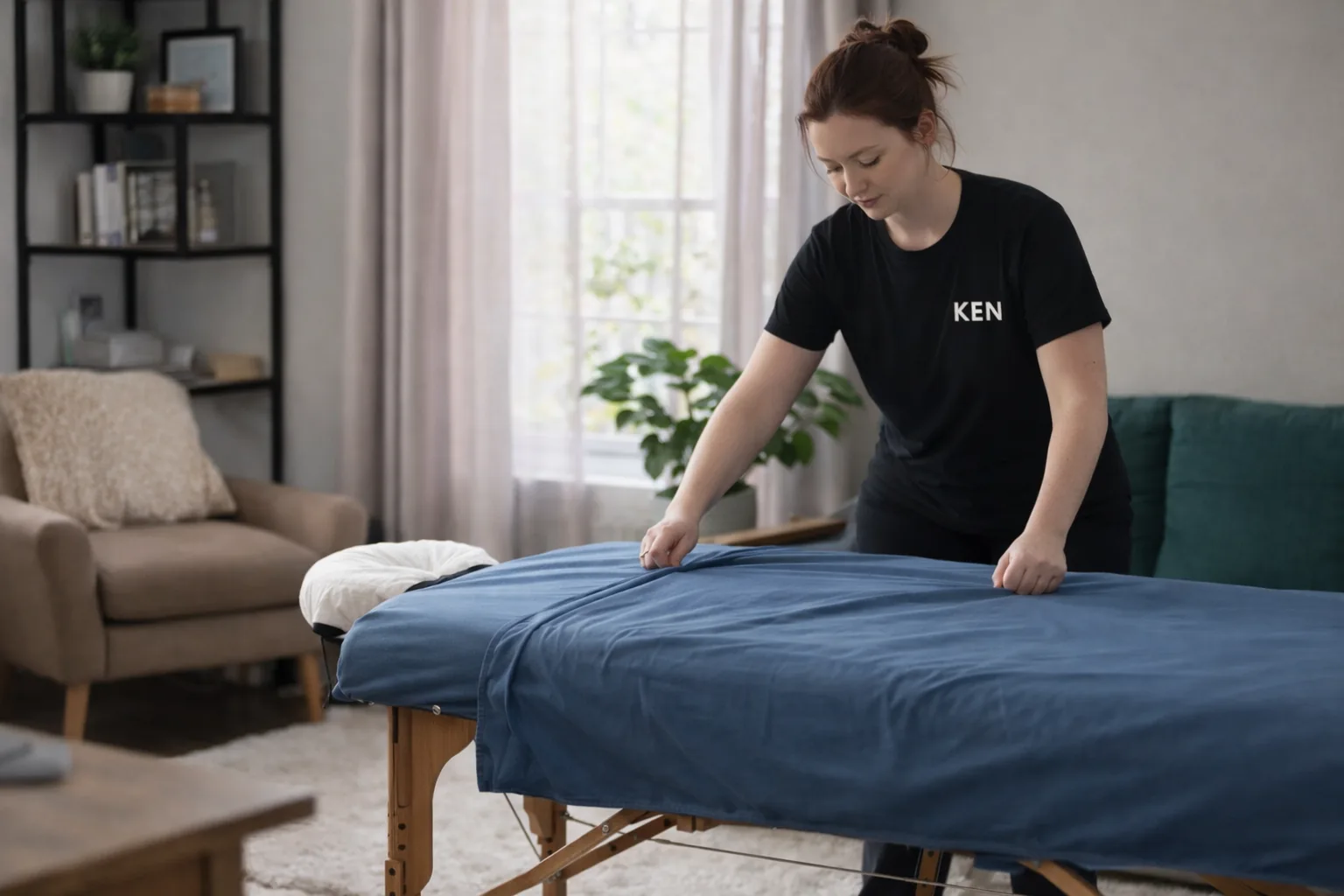
Mobile massage means I show up at your home with the full professional setup. You walk from your desk to the massage table. When we are done, you walk from the table to your couch. The total transition time is about ten steps.
For remote workers especially, this is the format that makes regular massage sustainable. If you had to drive across Palmdale or Lancaster to a spa every two weeks, you would eventually stop going. When the therapist comes to you, you actually keep the schedule.
Compare the full mobile vs spa experience.
Working from home and feeling the effects? Check pricing for your area and book a session. Your shoulders will thank you.