How to Choose a Mobile Massage Therapist
Choosing a mobile massage therapist means inviting someone into your home. That decision deserves more than a quick scroll through search results and picking whoever has the best photos. The difference between a qualified professional and someone who just bought a table online is significant, and it shows up in the session, the safety, and the results.
Here is what to look for, what to ask, and what tells you someone takes this work seriously.
Written by Ken at KEN Mobile Massage, serving the Antelope Valley since 2017. CAMTC certified, fully insured.
Credentials That Matter
CAMTC Certification (California)
In California, the California Massage Therapy Council (CAMTC) is the state-level certification body for massage therapists. A CAMTC certificate means the therapist:
- Graduated from an approved massage school (minimum 500 hours of training)
- Passed a background check
- Meets ongoing continuing education requirements
You can verify any therapist’s CAMTC status on the CAMTC website. If a therapist operating in California cannot provide a CAMTC number, that is important information.
Liability Insurance
A professional mobile therapist carries their own liability insurance. This protects you if something goes wrong during the session. It also protects the therapist, which means they are invested in operating safely and correctly.
Ask for proof. A professional will provide their certificate of insurance without hesitation. I provide mine upfront.
CPR and First Aid
A therapist working alone in your home should have current CPR and first aid certification. If a client has a medical event during a session, the therapist is the only trained person in the room. This is not optional.
Questions to Ask Before Booking
These questions are not confrontational. A good therapist will be glad you asked, because it means you are taking the session seriously:
- “Are you CAMTC certified?” In California, this is the baseline.
- “Do you carry liability insurance?” Yes or no. Simple.
- “How long have you been practicing?” Experience matters. A therapist with years of hands-on work has encountered more body types, conditions, and client needs than someone fresh out of school.
- “What modalities do you specialize in?” This tells you whether they can deliver the specific type of work you need. A therapist who specializes in relaxation may not be the right fit for chronic pain, and vice versa.
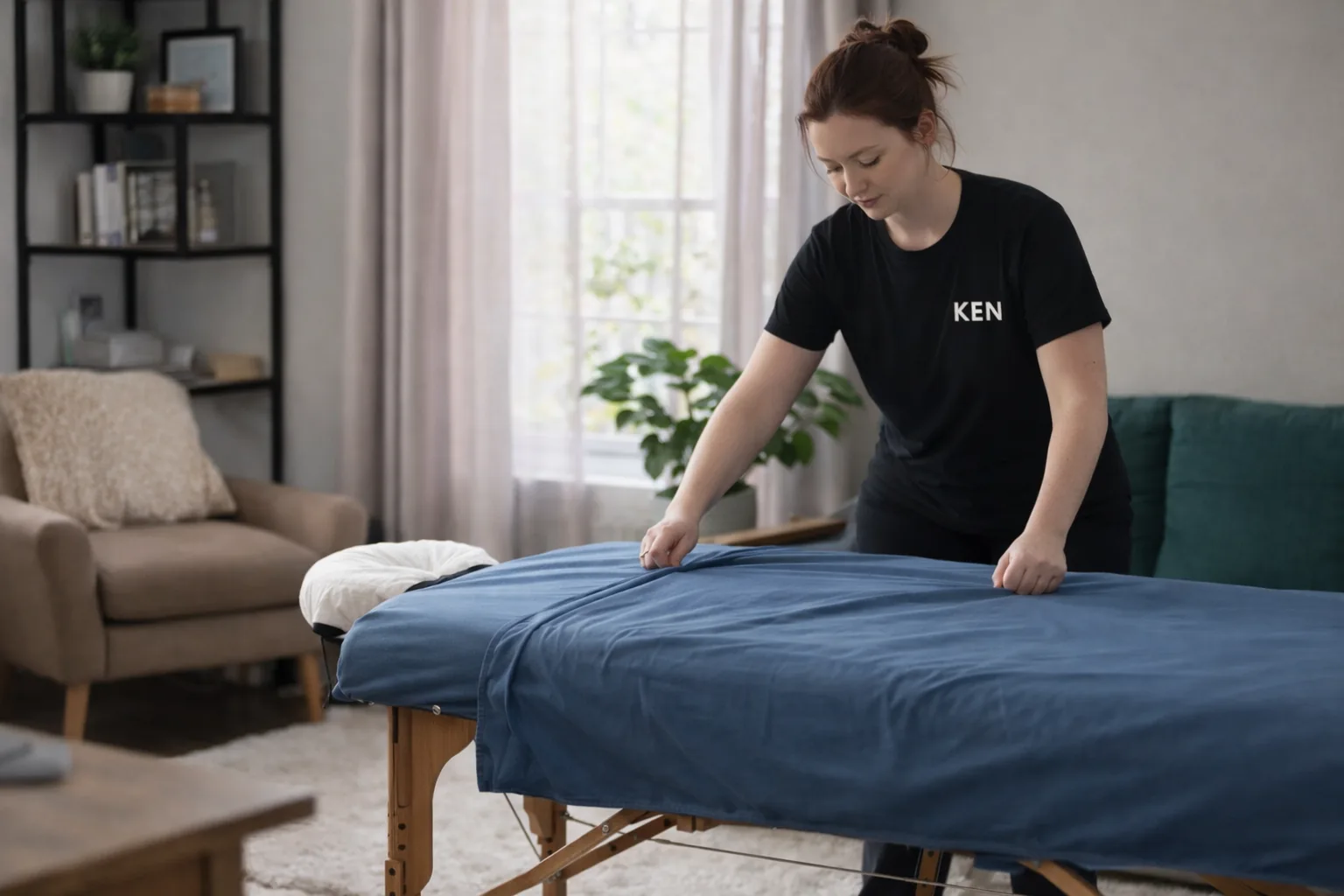
- “What do you bring?” A professional mobile therapist brings a professional table, fresh linens, face cradle, oils, and bolsters. If the answer is vague, that is a signal. Read about what a full professional setup looks like.
- “How do you handle draping?” Draping should be non-negotiable. Only the area being worked on should be exposed at any time. If a therapist is dismissive about draping protocols, walk away.
What Separates a Professional
Communication
A professional therapist asks about your health history, medications, injuries, and areas to avoid before touching you. This intake conversation should happen every time, even with returning clients, because your body changes between sessions.
During the session, a professional checks in about pressure and comfort. Not constantly, but at key moments: when switching areas, when increasing depth, when working near a sensitive spot.
Equipment Quality
The table, linens, and supplies tell you a lot. A professional-grade portable massage table costs several hundred dollars and is built for thousands of hours of use. Fresh, clean linens for every session. Professional massage oil or lotion, not drugstore products.
If a therapist shows up with a wobbly folding table and a towel, that is not the same service. Read more about professional mobile massage equipment.
Time Honesty
When you book 60 minutes, you should get 60 minutes of hands-on work. Setup and breakdown happen before and after your session clock. Some operations advertise 60 minutes but include setup, intake, and breakdown in that time, leaving you with 40 minutes of actual massage.
Ask how session time is measured. A professional will tell you clearly.
Consistency
A professional follows the same process every time. Same quality setup. Same intake questions. Same draping standards. Same cleanup. The experience on your tenth visit should be the same quality as your first, because the process is built into how they operate, not something they do when they feel like it.
Pricing Signals
Price alone does not tell you if a therapist is good. But it does tell you something about what you are getting.
- Well below market rate: The therapist may be unlicensed, uninsured, or cutting corners on equipment and linens. There is a cost floor to operating legally and professionally.
- At or above market rate: The therapist is covering insurance, quality equipment, fresh linens, professional products, and the time it takes to drive to your location, set up, perform the session, break down, and drive home.
In the Antelope Valley, a professional 60-minute mobile massage session typically runs between $100 and $150 depending on location and modality. Check current pricing for specific rates.
The value comparison is straightforward: you get the same quality bodywork as a spa, in your own home, without the drive, the parking, the lobby, or the commute home while drowsy. Compare the full breakdown of mobile vs spa.
Specialties to Look For
Different therapists specialize in different types of work. Make sure the therapist you choose actually offers what you need:
- Relaxation and stress relief: Swedish massage is the standard
- Chronic pain and tight muscles: Deep tissue or trigger point therapy
- Athletic recovery: Sports massage with targeted stretching and deep work
- Pregnancy: Prenatal massage requires specific positioning and technique training
- Couples: Couples massage requires two therapists and two tables, which is a logistics question, not just a skill question
A therapist who claims to do everything equally well may not have deep expertise in any one area. Look for someone whose training and experience align with what your body actually needs.
The Bottom Line
The right mobile massage therapist is licensed, insured, experienced, and communicative. They bring professional equipment, respect your space, and deliver consistent quality. They answer your questions directly and do not get defensive when you verify their credentials.
You are inviting someone into your home. You are trusting them with your body. That trust should be earned through verifiable qualifications and professional behavior, not just a nice website.
Ready to book with a CAMTC-certified, fully insured therapist? Check pricing for your area and schedule your session. Questions? Reach out directly.