Aromatherapy Massage: How Essential Oils Enhance Your Session
Every first-time client at KEN Mobile Massage gets complimentary aromatherapy. That is not an upsell. It is something I include because the difference it makes during a session is real, and I want every new client to experience it before deciding whether to add it to future sessions.
Here is what aromatherapy actually does during a massage, which oils are used, and why it is more than a nice smell.
Written by Ken at KEN Mobile Massage, serving the Antelope Valley since 2017.
What Aromatherapy Massage Is
Aromatherapy massage combines standard massage techniques with the application of essential oils. The oils are diluted in a carrier oil and applied directly to the skin during the session, or diffused into the air so you breathe them throughout.
This is not a different type of massage. It is an enhancement layered on top of the session you already booked. You still get the same hands-on work. Swedish massage with aromatherapy is still a Swedish massage. Deep tissue with aromatherapy is still deep tissue. The oils add a sensory and physiological dimension to the session without changing the core bodywork.
How Essential Oils Work During Massage
Essential oils enter your body through two pathways during a massage.
Inhalation. When you breathe in the aroma, the scent molecules travel through the olfactory system directly to the limbic system in the brain. The limbic system governs emotion, memory, and the autonomic nervous system. This is why certain scents can shift your mood almost instantly. It is not imagination. It is neuroanatomy.
Skin absorption. Essential oils are lipophilic, meaning they dissolve in fat. When applied to the skin in a carrier oil and worked in through massage strokes, the active compounds absorb through the skin and enter the bloodstream. The massage itself increases blood flow to the tissue, which increases absorption.
These two pathways work simultaneously. While you are breathing in the scent and experiencing the neurological effects, the compounds are also being absorbed through the skin and circulating systemically.
The Oils We Use and What They Do
Every essential oil has a different chemical profile and different effects. Here are the oils most commonly used during your session.
Lavender. The most versatile and most researched essential oil in massage. Lavender contains linalool and linalyl acetate, compounds that have been studied for their calming effects on the nervous system. A systematic review by Lee et al., published in the Journal of Alternative and Complementary Medicine (2011), found that aromatherapy, most commonly using lavender, was associated with reduced anxiety in clinical settings. During a massage, lavender deepens the relaxation response and may help with sleep quality after the session.
Eucalyptus. A cooling, clarifying oil that opens the airways and creates a sense of alertness. Eucalyptus contains eucalyptol (1,8-cineole), which has been studied for its effects on respiratory function. During a sports massage or deep tissue session, eucalyptus adds a cooling sensation that contrasts well with the warmth of deep pressure work.
Peppermint. Contains menthol, which creates a cooling sensation on the skin and may help with muscle discomfort. Peppermint is energizing rather than relaxing, so I use it during sessions where the goal is recovery and activation rather than deep relaxation.
Tea tree. Has antimicrobial properties. I use tea tree primarily for its clean, medicinal scent. It blends well with eucalyptus for an invigorating session.
Chamomile. A calming oil often paired with lavender for maximum relaxation. Chamomile has been used in traditional medicine for centuries for its soothing properties. During a Swedish massage, the combination of lavender and chamomile creates a deeply calming atmosphere.
Lemongrass. Bright and citrusy with a reputation for muscle-soothing properties. Lemongrass is popular with clients who want aromatherapy but find lavender too floral or too sedating.
What the Research Says
Essential oil research is a mixed field. Some claims are well-supported. Others are not. Here is what the evidence actually looks like.
Well-supported: Lavender aromatherapy is associated with reduced self-reported anxiety and improved relaxation. Multiple studies across different populations consistently show this effect. The mechanism (olfactory to limbic system activation) is well-understood.
Moderately supported: Essential oils applied during massage may enhance the perceived benefits of the massage itself. Participants in studies who received aromatherapy massage report greater relaxation and satisfaction than those receiving massage with unscented oil.
Not supported: Essential oils do not cure diseases, treat infections through skin application, or replace medical treatment. Any claim that essential oils treat specific medical conditions goes beyond what the research supports. Aromatherapy enhances the massage experience and may provide complementary relaxation benefits. That is the honest scope.
How It Works at KEN Mobile Massage
For first-time clients: Aromatherapy is complimentary. I bring a selection of oils and let you choose the scent profile you prefer, or I recommend one based on your session type and goals. Relaxation sessions pair well with lavender or chamomile. Active recovery sessions pair well with eucalyptus or peppermint. There is no additional charge for your first visit.
For returning clients: Aromatherapy is a $20 add-on to any solo session. For couples massage, the add-on is $40 (covers both clients). You can add it during booking or request it when your therapist arrives.
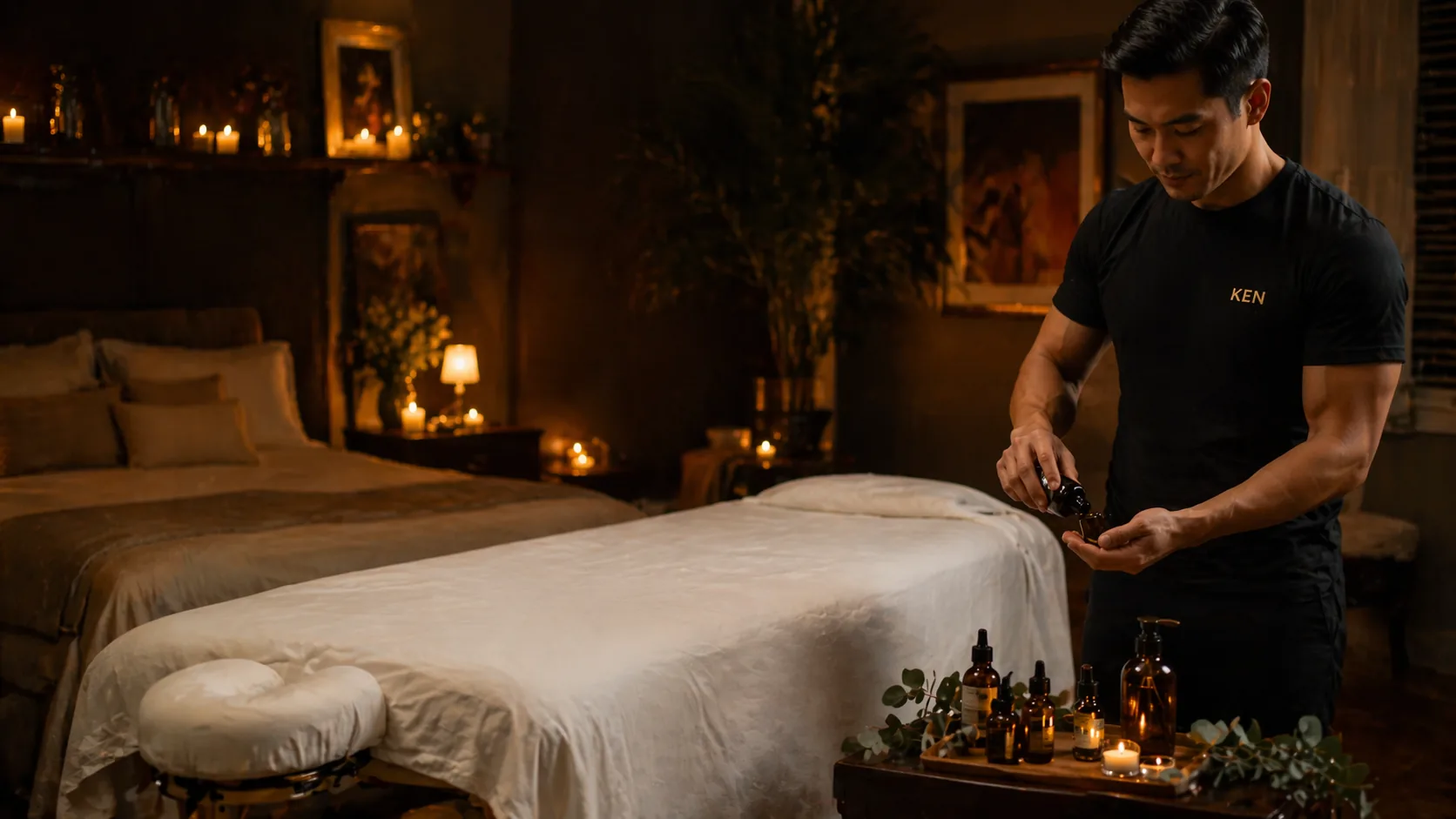
How it is applied: The essential oils are pre-diluted in a high-quality carrier oil at safe concentrations. I apply the oil blend during the massage, and a diffuser may run in the background to maintain the scent throughout the room. You do not need to bring anything or prepare anything. It is fully handled.
Who Benefits Most
First-time massage clients. If you have never had a massage before, aromatherapy adds a sensory layer that makes the experience more immersive. The scent gives your brain something pleasant to focus on while your body adjusts to the hands-on work. Read about your first time getting a massage at home for the full guide.
Stress and anxiety. If your primary reason for booking is stress relief, lavender aromatherapy amplifies the parasympathetic response that massage already produces. The combination of touch-based relaxation and scent-based limbic activation is more effective than either alone.
Sleep issues. Clients who book evening sessions (we schedule as late as 10pm) and struggle with sleep often report better sleep on massage nights with lavender aromatherapy. The relaxation carries into the hours after the session.
Athletes who want recovery support. Eucalyptus and peppermint during a sports massage create a cooling, invigorating contrast to deep pressure work. It does not replace proper recovery, but it enhances the sensory experience and the feeling of being “reset” after a hard training block.
Common Questions
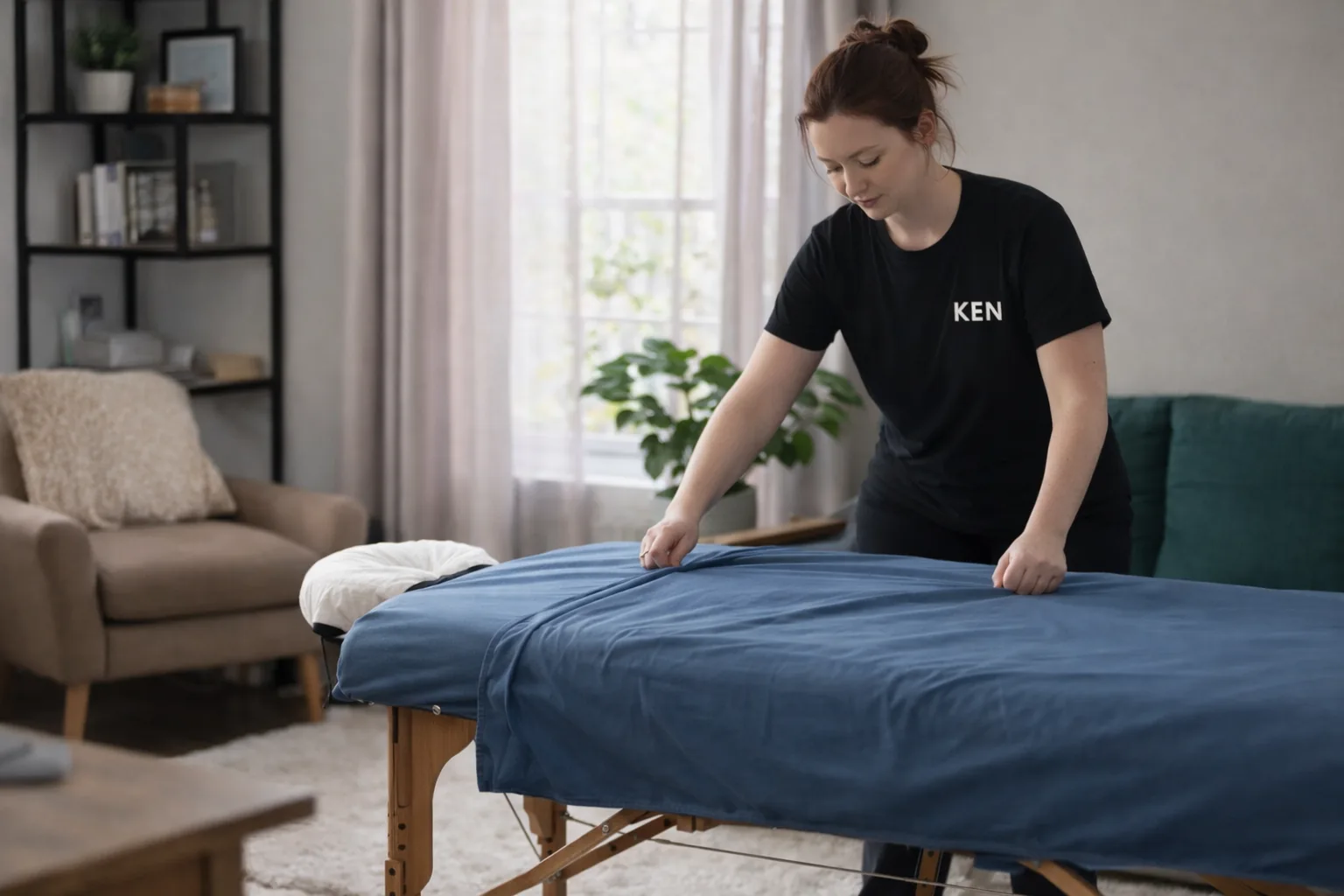
Will the oils stain my sheets? The carrier oil may leave some residue, similar to any massage oil or lotion. We use your sheets (or ours), and any residue washes out normally. Using older sheets for your massage is always a safe choice.
What if I have sensitive skin? Let your therapist know before the session. We use standard dilution ratios that are safe for most skin types, but we can reduce the concentration or skip direct skin application and use diffuser-only aromatherapy instead.
Can I choose my own oil? Yes. If you have a preference, tell your therapist. If you do not have a preference, your therapist will recommend one based on your session goals.
Is aromatherapy available for prenatal massage? Some essential oils are considered safe during pregnancy and some are not. For prenatal sessions, we use only pregnancy-safe oils at reduced concentrations, and only if you and your healthcare provider are comfortable with it. If you prefer to skip aromatherapy during pregnancy, that is completely fine.
The Bottom Line
Aromatherapy is not magic. It is the strategic use of plant-based compounds that interact with your nervous system through inhalation and skin absorption. When combined with professional massage, it enhances relaxation, may improve the perceived benefits of the session, and makes the overall experience more immersive.
Every first-time client gets it for free. After that, it is $20 per session. Most clients who try it with their first session add it to every session after that.
Ready to experience it? Your first session includes complimentary aromatherapy. Browse Swedish massage for relaxation or deep tissue for targeted work. Check pricing for your zone and book your session.